One of the most common reasons a parent schedules a doctor visit for their child is a skin rash. Unsightly, uncomfortable, and sometimes contagious, rashes can prevent a child from attending school or participating in an important sporting event and can ruin a parent’s good night’s sleep.
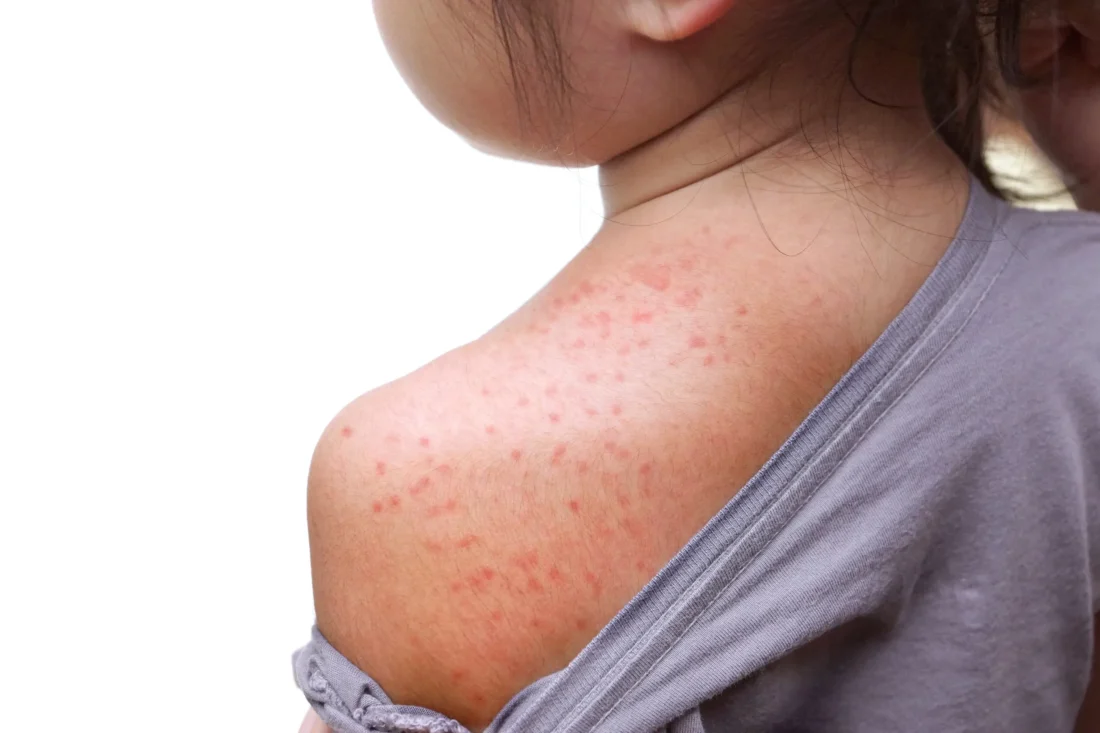
There are a variety of conditions that can cause a skin rash, and unfortunately, it’s not always easy to tell them apart. Some, like contact dermatitis, heat rash or hives, are harmless and can clear up on their own. But others spread and can signal more serious health issues.
Parents sometimes take a wait-and-see approach when their child develops a rash. But for some conditions, like the highly contagious molluscum contagiosum (pronounced muh-lus-kum) that can spread quickly through households, daycare centers, schools, and sports teams, the wait-and-see approach likely won’t cut it.
Fall sports, school activities, and more close contact indoors are all increasing as the days grow shorter, and now is the season when rashes, including molluscum, spread most easily. It’s a perfect time to learn what’s normal, what’s concerning, and what’s next when it comes to treating rashes.
What to know about Molluscum Contagiosum
Molluscum contagiosum is a highly contagious viral skin infection caused by a poxvirus and one of the most common skin infections seen by dermatologists, pediatric dermatologists, and pediatricians. It causes small, pink or flesh-colored bumps with a central dimple. The rash tends to be painless but can be itchy, turn red, or blister. The condition most often affects children aged 1 to 10, but can also occur in adults, particularly those with close skin-to-skin contact or weakened immune systems.
Prevalence
Molluscum accounts for about one percent of all skin diagnoses worldwide, but prevalence appears to be increasing in all age groups. In the U.S. there are up to six million new incidents every year and pediatric patients are disproportionately affected compared to adults, with the highest incidence of molluscum occurring among children under the age of 14 years. In real-world clinical practice, it most commonly presents in patients 1 to 4 years of age, but older children can develop more extensive infection and require more frequent treatments.
Why parents worry
The impact of molluscum on families can be significant. The bumps can be visible on any part of the body, but they are most commonly found on the face, neck, arms, legs, chest, and abdomen. The bumps can also persist for weeks to months to years, often spreading to other household members through towels, bath sponges, clothing, and toys. This explains why many parents grow concerned and frustrated. And for children, molluscum can cause embarrassment, sleep loss from itching, and worry about spreading the rash.
When to seek treatment
While molluscum can sometimes resolve on its own without scarring, treatment by a physician is often recommended. When parents notice a handful of bumps, bumps in visible or uncomfortable locations, or a secondary bacterial infection, then it is time to schedule an appointment. There are a number of treatment options available, from an at-home topical prescription medication to in-office procedures.
How parents can approach care and prevention
Parents aiming to better understand and treat skin rashes, including molluscum, should start by talking with a pediatrician or a dermatologist about options that match your child’s age, number and location of the bumps. There are also several simple hygiene measures parents can take, including:
- Having kids not share towels or clothing
- Encouraging kids not to scratch or touch bumps
- Covering visible bumps with clothing or a bandage during playtime
- Having kids wash their hands regularly
- Bathing siblings separately
When it comes to skin rashes, parents need to know when to be concerned and what options are available. To learn more about molluscum visit MomsAgainstMolluscum.


