With the first Star Wars film in seven years, The Mandalorian and Grogu, now in theatres, many fans will once again be dreaming of wielding their own lightsaber.
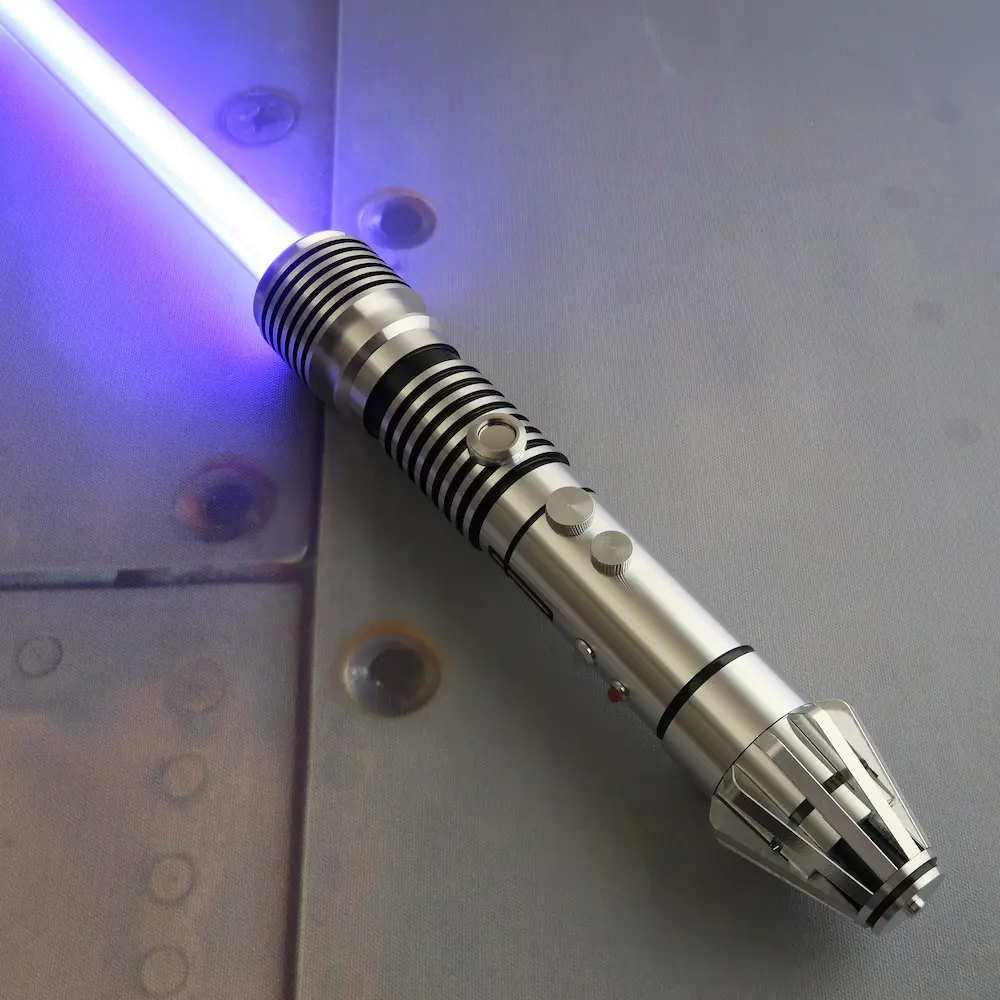
Google searches for “Build Your Own Lightsaber” have risen by a huge 550% in the last week, with terms such as “Home Depot Lightsaber” and “Lightsaber Parts List” also seeing huge jumps, despite the new Star Wars film being one of the few in the franchise not to feature one on the big screen.
Thankfully, the precision engineering experts at Accu have revealed how enthusiasts and families can build a realistic lightsaber hilt at home for $50 using stainless steel engineering components and readily available plumbing fittings from DIY stores.
The project combines precision washers, bolts and nuts with common plumbing accessories to create a prop-quality lightsaber hilt that looks and feels like functional technology. A full table of components is below the article.
Patrick Faulkner, Lead Engineer at Accu, comments:
“The genius of the original lightsaber props is that they weren’t designed from scratch. They were assembled from existing hardware, and that’s exactly why they look so convincing. Real engineering components have a visual weight that fabricated props just can’t replicate.”
The design is inspired by the original 1977 Star Wars props, which were famously built using modified camera flash handles and industrial hardware. By using the same principles, modern makers can create a screen-worthy lightsaber using a simple mechanical assembly based around a central bolt, stacked washers and a handful of off-the-shelf plumbing fittings.
For beginners, getting started can cost less than $50, with the majority of the build consisting of stainless steel engineering components and plumbing accessories available from major DIY retailers. The build requires no specialist electronics, no power tools and can be completed in under an hour using little more than a spanner.
How to build your own lightsaber in five steps
1. Gather your components
The build starts with a collection of stainless steel precision components, including a long bolt, penny washers, flat washers and locking nuts. These form the core structure of the lightsaber and create its distinctive ribbed appearance.
To complete the design, several inexpensive plumbing fittings are added, including pipe reducers, compression fittings and an isolating valve. Together, the complete bill of materials costs approximately $51.
2. Build the grip section
Take the M10 x 210mm stainless steel bolt and slide on all nine M12 x 40mm penny washers. These create the iconic ribbed grip section seen at the bottom of many lightsaber hilts throughout the Star Wars universe.
Next, slide on five M12 x 24mm flat washers. The slightly smaller diameter creates a stepped transition between the grip and the upper body, helping replicate the layered industrial appearance of the original movie props.
3. Add the emitter assembly and hilt body
Slide the 22mm x 15mm copper reducer onto the bolt, followed by the 28mm x 22mm reducer and then the 22mm x 15mm compression reducer. Together, these plumbing fittings create the emitter section at the top of the lightsaber where the blade would emerge.
To build the main body of the hilt, add one M10 x 20mm flat washer followed by one M10 x 30mm penny washer. Continue alternating the M10 x 30mm penny washers and M10 x 20mm flat washers along the bolt until most of the remaining washers have been used.
The alternating washer sizes create the raised ridges and recessed grooves that give the lightsaber its distinctive machined appearance.
“Once you understand that the hilt is just a bolt, a stack of components and a locking nut, you realise you can build almost anything,” added Faulkner. “The architecture is the same whether you’re building Obi-Wan’s saber or something entirely your own.”
4. Add the switch section
Slide the 15mm compression isolating valve onto the assembly. This component forms the upper hilt body and resembles the activation switch housing seen on many lightsaber designs.
Finish the upper section by adding the remaining M10 x 20mm flat washers and M12 x 24mm flat washers above the valve. These create the final transitions and help balance the proportions of the finished hilt.
5. Tighten and customise
To complete the build, add one M12 x 24mm flat washer, followed by the M20 hexagon nut to form the pommel at the base of the hilt.
Finally, secure everything with the M10 locking nut at the end of the bolt and tighten with a spanner. As the nut tightens, the entire assembly is compressed together, creating a surprisingly rigid structure held together using the same mechanical principles found in countless engineering applications.
Builders can leave the hilt with its natural metallic finish or customize it with paint, weathering effects and decorative details. Those wanting to take the project further can even add a plastic blade tube or electronics to create a fully illuminated lightsaber.
According to Accu, one of the biggest advantages of the design is that it uses genuine engineering principles. The central bolt acts as a tension rod while the locking nut compresses every component into a single rigid structure, giving the finished prop a realistic weight and feel.
“When you pick this up for the first time, you feel it immediately,” said Faulkner. “It’s hundreds of grams of stainless steel held in compression. It doesn’t feel like a toy; it feels like a mechanical assembly that happens to belong in a galaxy far, far away.”
Building a custom lightsaber is now more achievable than ever. With affordable hardware, readily available plumbing fittings and a simple assembly process, Star Wars fans can create a realistic display piece worthy of a Jedi Master without needing specialist tools or expensive equipment.
Table of components:
| Component | Quantity | Cost | Purpose |
| M12 x 40mm Penny Washers – Stainless Steel (A2) | 9 | $11.22 | Forms the ribbed lower grip section of the lightsaber |
| M12 x 24mm Form A Flat Washers (DIN 125) – Stainless Steel (A2) | 8 | $2.79 | Creates profile transitions and pommel detailing |
| M10 x 30mm Penny Washers – Stainless Steel (A2) | 13 | $4.18 | Creates the larger ridges along the main hilt body |
| M10 x 20mm Form A Flat Washers (DIN 125) – Stainless Steel (A2) | 22 | $4.42 | Creates recessed sections and alternating ridge pattern |
| M20 Hexagon Nut (DIN 934) – Marine Stainless Steel (A4) | 1 | $4.66 | Forms the pommel cap at the base of the hilt |
| M10 x 210mm Plain Hexagon Bolt (DIN 931) – Stainless Steel (A2) | 1 | $7.53 | Central structural core of the assembly |
| M10 Hexagon Nut (DIN 934) – Stainless Steel (A2) | 1 | $1.35 | Locking nut used to compress and secure the entire build |
| Flomasta End Feed Straight Reducer 22mm x 15mm | 1 | $3.35 | Creates part of the emitter section |
| Flomasta End Feed Straight Reducer 28mm x 22mm | 1 | $4.02 | Creates the wider emitter profile |
| Plumbsure Compression Reducer 22mm x 15mm | 1 | $2.68 | Adds transition detailing to the emitter assembly |
| Flomasta Compression Isolating Valve 15mm | 1 | $5.36 | Forms the upper hilt body and switch section |


