Uterine fibroids can create an odd mismatch between what a scan shows and how a person actually feels. One woman may have several fibroids with few symptoms. Another may have one fibroid that causes heavy bleeding, pelvic pressure or problems that repeatedly disrupt everyday life. Size alone rarely tells the whole story.
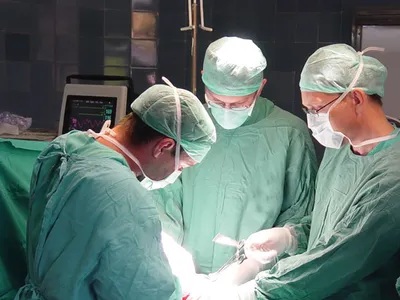
That distinction matters when considering treatment. A discussion about surgery for uterine fibroids usually makes more sense when it is tied to symptoms, fibroid location, reproductive plans and the effect on daily life rather than the simple fact that a fibroid exists. The question is not merely whether it can be removed. It is whether removing it solves a problem important enough to justify an operation.
Symptoms Matter More Than Presence
Fibroids are often discovered during an ultrasound performed for another reason. Once they appear on the screen, it is easy to assume something must be done.
That can be misleading. A fibroid that causes little trouble may not require the same response as one associated with repeated heavy bleeding, significant pressure or fertility concerns.
This leads to a useful decision rule: treatment should usually be driven by the problem the fibroid is causing, not simply by the anxiety created by knowing it is there.
The scan provides anatomy. Your symptoms provide context. Both matter.
Location Can Change Everything
Two fibroids of similar size can behave very differently depending on where they grow.
A fibroid that projects towards the uterine cavity may affect bleeding or distort the space inside the uterus. Another growing towards the outside may create pressure without affecting the cavity in the same way. Others sit within the muscular wall.
This is why asking only, “How big is it?” can produce an incomplete answer.
A more useful set of questions is:
- Where is the fibroid located?
- Is it changing the shape of the uterine cavity?
- Does its position explain my symptoms?
- Has it changed compared with earlier imaging?
- Would removing it address the specific problem I have?
Those questions connect the scan to a treatment decision.
Surgery Is Not One Operation
People often speak about fibroid surgery as though it were a single procedure. In reality, the surgical approach can vary substantially depending on the fibroid’s size, number and location.
Some fibroids that project into the uterine cavity may be approached through the cervix without an abdominal incision. Others may require keyhole surgery, while larger or more complex cases can require a different surgical approach.
This creates an important trade-off. A less invasive operation may offer easier recovery, but it is not automatically suitable for every fibroid. Choosing the smallest procedure possible is not the goal. Choosing the procedure capable of dealing effectively with the fibroid while avoiding unnecessary intervention is.
That distinction matters more than the label attached to the operation.
Fertility Changes The Conversation
Treatment decisions can look different when future pregnancy matters.
For someone whose main concern is symptom control and who does not plan to become pregnant, the range of reasonable options may differ from someone hoping to preserve the uterus for future fertility.
Imagine two women with similar scan findings. One has completed her family and is primarily concerned about repeated heavy bleeding. The other hopes to conceive and has a fibroid affecting the uterine cavity. The same scan does not automatically lead to the same treatment plan because their goals are different.
A treatment is only appropriate in relation to what you want your body to be able to do afterwards.
Recovery Deserves More Attention
Patients understandably spend considerable time asking what will happen during surgery. Less attention is sometimes given to the weeks after it.
Recovery affects work, exercise, childcare and other responsibilities. The expected recovery period can also vary depending on the surgical approach and the complexity of the procedure.
One costly mistake is planning around the operation date but not around recovery. People may arrange transport home and a few days away from work, then discover that returning to normal activity takes more planning than expected.
Before surgery, ask what you can reasonably expect during the first few days, when normal activities usually resume and which symptoms after the operation should prompt medical review.
Know What Success Means
Successful fibroid treatment does not necessarily mean that every fibroid disappears forever.
A more practical definition of success may be lighter bleeding, less pressure, improved quality of life or addressing a fibroid thought to be interfering with reproductive plans. The target depends on why treatment was considered in the first place.
This is another reason to define the problem before choosing the procedure. If heavy bleeding is the main concern, improvement in bleeding matters more than achieving a perfectly fibroid-free scan. If pressure is the problem, relief of that pressure becomes the meaningful outcome.
The clearest surgical decisions usually begin before anyone enters an operating theatre. They begin by connecting anatomy with symptoms, future plans and the burden those symptoms create. Fibroids do not need to be treated simply because they exist. When surgery is considered, it should have a clear job to do and a result that matters to you.


