Plenty of families have a drawer like this, with tangled chains, a single earring, a class ring nobody wears and a bracelet with a broken clasp. When money feels tight or you’re clearing space, it’s tempting to bag the whole lot and take it to the first buyer you find.
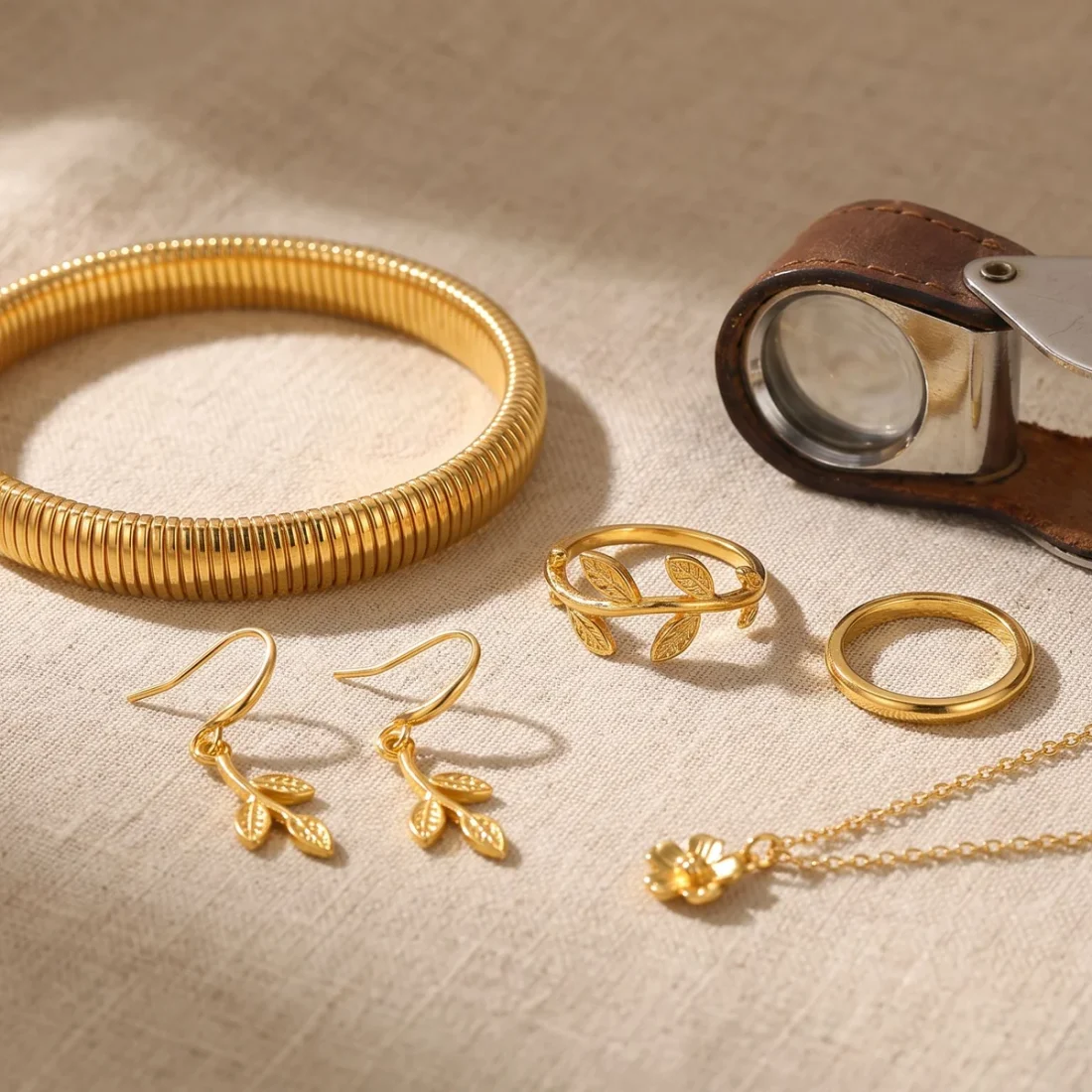
Slow down first. A gold piece can carry three kinds of value, and they don’t always line up. There’s what it means to your family, what it could be worth as jewelry and what the metal alone would bring if melted. Sorting before you sell helps you see all three, so a quick clearout doesn’t become a sale you wish you could undo.
Decide what isn’t for sale first
Before you weigh or price anything, pull out the pieces you already know you’ll keep. That might be a grandparent’s wedding band, a locket with a photo inside or a bracelet a child has asked for. Put them in their own box. Doing this first keeps the money conversation away from them.
Make a maybe pile for anything you feel unsure about. You don’t have to decide today. A few weeks in a labeled bag costs nothing, while a melted ring can’t be brought back.
Check whose jewelry it really is
Jewelry in your drawer isn’t always yours alone. Some pieces were lent, promised or left to more than one person. A parent may have said a ring should go to a certain grandchild.
Ask before you sell anything that came from someone else. A short message to siblings or grown children, with photos attached, can head off a painful argument later. If an estate is still being settled or a will names individual pieces, talk with whoever is handling it first.
Photograph everything and keep pieces apart
Lay each item on a plain, light surface near a window and take a few photos. Get the front, the back and a close shot of any stamp or maker’s mark, often found inside a band or near a clasp.
Keep every piece separate once it’s photographed. Small zip bags or envelopes work well. Label each one with a number that matches the photo, the mark you think you saw and where the piece came from. If you can’t read a mark or aren’t sure what something is, write unknown. That label keeps a mystery piece out of the scrap pile.
Read the marks without treating them as proof
Gold jewelry may be stamped with its karat. Pure gold is 24 karat, and because it’s soft, the gold in jewelry is often blended with other metals. A 14K piece is 14 parts gold and 10 parts other metal. An 18K piece is 18 parts gold and 6 parts other metal.
Some gold colored jewelry isn’t solid karat gold at all. The Federal Trade Commission describes rolled gold plate, gold overlay and gold filled pieces as having a layer of gold, 10 karat or higher, mechanically bonded over a cheaper base metal. Those pieces are supposed to carry the karat of the gold layer plus the plating term, so you might see 12K RGP or 14K gold overlay. Vermeil is sterling silver with a gold coating. Read the whole stamp, not just the number.
A mark is a helpful clue, not a guarantee. Stamps can be worn, misread or simply wrong, and a missing stamp doesn’t settle anything either. Skip scratching, filing, acids or any home test that could damage a piece. Leave testing to a jeweler or buyer who will show you the result.
Get a qualified opinion before anything is scrapped
Some pieces may be worth more as jewelry than as metal. Set aside anything with stones, anything signed by a known designer or maker and anything that looks old or handmade. A melt estimate only counts the gold, so it says nothing about a good stone or a collectible name.
Have a qualified appraiser or experienced jeweler look at these first. Find out what the piece is, whether it could sell as jewelry and what a repair would involve. An appraisal isn’t a promise that anyone will pay that amount, but it tells you what you’re holding before you choose. Don’t pry out stones yourself to get a cleaner weight.
Estimate metal value with the matching karat row
For plain solid pieces you’ve decided to sell, a rough metal estimate gives you a reference point. Gold is commonly priced by the troy ounce, which is about 31.1 grams, so work in grams and keep your units consistent.
A gold price per gram table lists a separate row for each karat, so pick the row that matches the stamp you photographed. A chain marked 14K goes on the 14K row, and a ring marked 18K goes on the 18K row. Multiply that row’s per gram figure by the weight of the karat metal in the piece. Gold filled, overlay, RGP and vermeil items don’t belong on those solid karat rows, even when their stamp includes a number.
Be careful with that weight. A kitchen or postal scale reads everything on it, including stones, pearls and any parts that aren’t gold. That reading is the item’s total weight, not its gold weight, so an estimate built on it will run high.
Whatever number you reach is an estimate, not an offer. Gold prices move throughout the day. Expect buyer offers to come in below melt value. Use the estimate to understand offers, not to expect a particular payout.
Compare offers for the same items
If you do sell, get more than one offer and make sure each buyer is pricing the same pieces. Bring the same labeled bags to each one. Ask every buyer to write down the weight they measured, the karat they’re paying for, the price per gram and any fees or deductions.
Written details make it easy to spot a different weight or a fee that appears only at the end. Ask for time if you need it. A buyer who won’t put an offer in writing gives you a reason to walk away.
Mail jewelry only with written terms
Selling by mail means your jewelry leaves your hands before you see a price. Get the buyer’s terms in writing before you ship anything. Check how items are insured in transit, how they’re logged when they arrive, how long you have to accept or decline an offer and how your pieces come back, and at whose cost, if you say no.
Keep your photos, your labeled list and the tracking number together. If a piece arrives damaged or goes missing, that record is what you’ll rely on.
Settling what to keep, repair or sell
A broken chain or loose clasp may be a straightforward fix, and a repaired piece could go back into use or become a gift. Ask a jeweler for a written quote first, since repair costs vary.
Pieces with family meaning can stay in the keep box even if nobody wears them. The maybe bag can wait another season. Anything nobody wants can go to whichever buyer gave you the clearest written offer. Save the photos and labels after any sale, so the family has a record of what went and why.


