Whether you are planning new flooring, painting a bedroom, buying tiles, measuring a garden, or estimating the size of a property, understanding square metres can save you time, money and stress. Square metres are commonly used for home, room, flooring, painting, tile and land measurements.
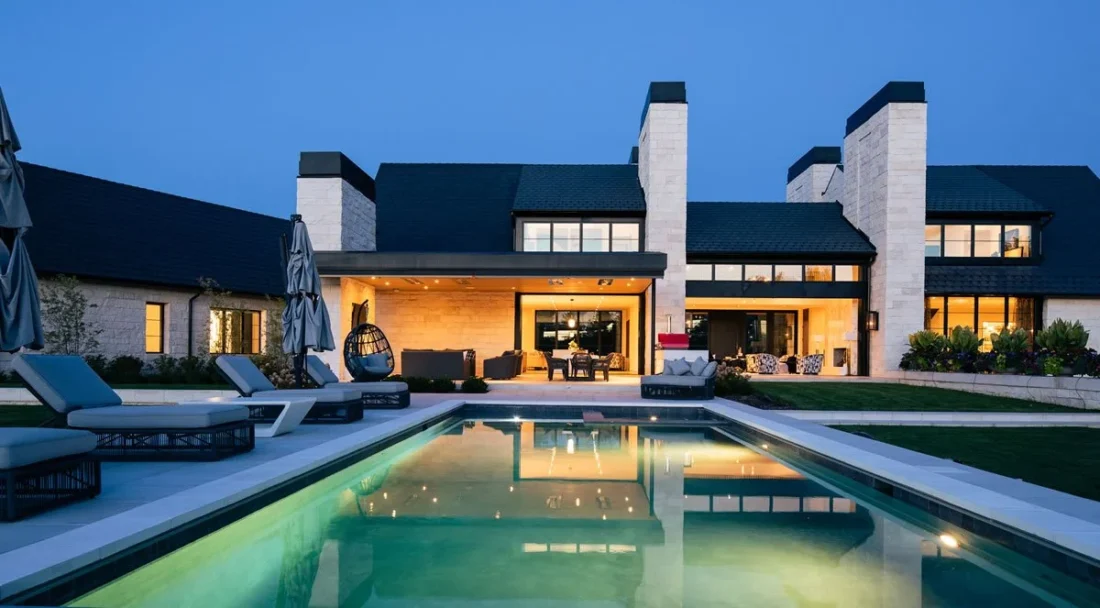
How to Work Out Square Metres is one of the most useful measurement skills for homeowners, renters, DIY beginners and anyone planning a home improvement project. The basic method is simple: for a rectangular area, measure the length and width, then multiply them together to calculate the area in square metres .
What Is a Square Metre?
A square metre, written as m², is a unit used to measure area. Area means the amount of surface space something covers. For example, floors, walls, patios, lawns and rooms can all be measured in square metres.
Think of one square metre as a square that is:
- 1 metre long
- 1 metre wide
So, when a room is described as 20 m², it means the room has the same amount of floor space as twenty 1 metre by 1 metre squares.
Square metres are especially helpful when ordering products sold by area, such as:
- Carpet
- Laminate flooring
- Vinyl flooring
- Floor tiles
- Wall tiles
- Wallpaper
- Paint
- Turf
- Decking
- Paving slabs
The Basic Formula for Working Out Square Metres
The main formula is:
Length × Width = Area in Square Metres
Or:
L × W = m²
This formula works best for square or rectangular spaces .
For example, if a room is:
- 5 metres long
- 4 metres wide
The calculation is:
5 × 4 = 20 m²
So, the room is 20 square metres.
This same formula can be used for many rectangular home spaces, including bedrooms, living rooms, kitchens, patios, hallways and gardens.
Step-by-Step: How to Work Out Square Metres
1. Measure the Length
Start by measuring the longest side of the space. Use a tape measure or laser measure and write the measurement in metres.
Example:
Length = 4.5 m
If your measurement is in centimetres, convert it into metres before calculating. Measurements should be converted before working out square metres to avoid inaccurate results .
Common conversions:
- 100 cm = 1 m
- 250 cm = 2.5 m
- 375 cm = 3.75 m
- 420 cm = 4.2 m
2. Measure the Width
Next, measure the shorter side of the space.
Example:
Width = 3.2 m
For the best result, measure from wall to wall and try to keep the tape measure straight. Measuring twice is a good way to avoid mistakes, especially in irregular spaces .
3. Multiply Length by Width
Now multiply the two measurements:
4.5 × 3.2 = 14.4 m²
So, the area is 14.4 square metres.
4. Add Extra for Waste When Buying Materials
If you are buying flooring, tiles, wallpaper or other materials, it is sensible to order slightly more than the exact measurement. This allows for cutting, fitting, mistakes and awkward corners.
For most simple projects, adding 5% to 10% extra is a common practical approach. For patterned tiles, diagonal layouts, complex rooms or wallpaper with pattern matching, you may need more.
How to Work Out Square Metres for a Room
Most rooms are rectangular or close to rectangular, so they are usually simple to measure.
Example:
A bedroom measures:
- Length: 4 m
- Width: 3 m
Calculation:
4 × 3 = 12 m²
So, the bedroom is 12 square metres.
A rectangular room can have different length and width combinations while still having the same total area; for example, a 15 m² room could measure 5 m by 3 m .
How to Work Out Square Metres for Flooring
Flooring is one of the most common reasons people need to calculate square metres. Carpet, laminate, vinyl, engineered wood and tiles are often priced or packaged by square metre.
To calculate flooring:
- Measure the length of the room.
- Measure the width of the room.
- Multiply length by width.
- Add extra for waste.
- Check how many square metres each pack covers.
Example:
A living room measures:
- 5 m long
- 4 m wide
Calculation:
5 × 4 = 20 m²
Add 10% extra:
20 × 1.10 = 22 m²
So, you should buy enough flooring to cover around 22 m².
If one pack of flooring covers 2.2 m², divide:
22 ÷ 2.2 = 10 packs
You would need 10 packs.
How to Work Out Square Metres for Carpet
Carpet measurement is similar to flooring, but it is important to consider the shape of the room, doorways and fitting direction.
Example:
A room measures:
- 4.8 m long
- 3.6 m wide
Calculation:
4.8 × 3.6 = 17.28 m²
Add 10%:
17.28 × 1.10 = 19.01 m²
So, you should allow for about 19 m² of carpet.
If your room has alcoves, bay windows or built-in wardrobes, measure those areas separately and add them to the total.
How to Work Out Square Metres for Walls
To calculate wall area, use this formula:
Wall Width × Wall Height = Wall Area in m²
Example:
A wall is:
- 4 m wide
- 2.4 m high
Calculation:
4 × 2.4 = 9.6 m²
So, the wall area is 9.6 square metres.
This is helpful when estimating paint, wallpaper, tiles, wall panels or plastering.
How to Calculate All Walls in a Room
To work out the total wall area of a room, calculate each wall separately and add the answers together.
Example room:
- Wall 1: 4 m × 2.4 m = 9.6 m²
- Wall 2: 4 m × 2.4 m = 9.6 m²
- Wall 3: 3 m × 2.4 m = 7.2 m²
- Wall 4: 3 m × 2.4 m = 7.2 m²
Total wall area:
9.6 + 9.6 + 7.2 + 7.2 = 33.6 m²
If the room has windows and doors, measure them separately and subtract them from the total.
Example:
Door area:
0.9 m × 2 m = 1.8 m²
Window area:
1.2 m × 1 m = 1.2 m²
Total openings:
1.8 + 1.2 = 3 m²
Final wall area:
33.6 – 3 = 30.6 m²
So, the paintable or wallpaper area is approximately 30.6 m².
How to Work Out Square Metres for Paint
Paint tins usually show coverage information, often written as square metres per litre. Once you know your wall area, you can estimate how much paint you need.
Example:
Wall area:
30 m²
Paint coverage:
10 m² per litre
Calculation for one coat:
30 ÷ 10 = 3 litres
If you need two coats:
3 × 2 = 6 litres
So, you would need around 6 litres of paint.
Always check the paint tin because coverage can vary depending on the surface, colour, paint type and wall condition.
How to Work Out Square Metres for Tiles
Tiles are usually sold by square metre, so accurate measurements are important for bathrooms, kitchens, splashbacks and floors.
Example:
A bathroom floor measures:
- 2.5 m long
- 2 m wide
Calculation:
2.5 × 2 = 5 m²
Add 10% waste:
5 × 1.10 = 5.5 m²
So, you should buy at least 5.5 m² of tiles.
For complicated tile layouts, such as herringbone, diagonal patterns or small mosaic tiles, it is wise to allow extra waste.
How to Work Out Square Metres for an Odd-Shaped Room
Not every space is a perfect rectangle. Some rooms are L-shaped, have alcoves, chimney breasts, extensions or bay windows.
The easiest way to measure an irregular space is to split it into smaller simple shapes, calculate each area separately, and then add them together .
Example: L-shaped room
Section 1:
- 5 m × 3 m = 15 m²
Section 2:
- 2 m × 2 m = 4 m²
Total:
15 + 4 = 19 m²
So, the full room area is 19 square metres.
This method is useful for:
- L-shaped living rooms
- Open-plan kitchen diners
- Hallways with turns
- Rooms with alcoves
- Gardens with separate sections
How to Work Out Square Metres for a Triangle
Some spaces are triangular, especially in gardens, lofts, roof areas or awkward corners.
For a right-angled triangle, multiply the two sides next to the 90-degree corner, then divide by two .
Formula:
Base × Height ÷ 2 = Area
Example:
A triangular space has:
- Base: 4 m
- Height: 3 m
Calculation:
4 × 3 ÷ 2 = 6 m²
So, the triangular area is 6 square metres.
How to Work Out Square Metres for a Garden
Gardens are often measured in square metres when planning turf, artificial grass, decking, patios, gravel, paving or landscaping.
For a rectangular garden:
Length × Width = m²
Example:
A garden measures:
- 10 m long
- 6 m wide
Calculation:
10 × 6 = 60 m²
So, the garden area is 60 square metres.
For an irregular garden, split it into smaller rectangles or triangles, calculate each part and add the areas together .
How to Work Out Square Metres for a Two-Storey Home
To estimate the square metres of a simple two-storey home, measure the length and width of the building footprint, multiply them together, then double the result for two floors .
Example:
House footprint:
- 8 m long
- 6 m wide
Ground floor area:
8 × 6 = 48 m²
For two storeys:
48 × 2 = 96 m²
So, the approximate total floor area is 96 m².
This works best for homes where both floors are similar in size. If the upstairs layout is smaller or includes extensions, measure each floor separately for a more accurate result.
How to Convert Centimetres to Square Metres
If your measurements are in centimetres, convert them to metres first. Measurements should be converted before calculating area .
Formula:
Centimetres ÷ 100 = Metres
Example:
- 450 cm = 4.5 m
- 320 cm = 3.2 m
Now calculate:
4.5 × 3.2 = 14.4 m²
So, the area is 14.4 square metres.
Avoid multiplying centimetres directly unless you are comfortable converting square centimetres into square metres afterwards.
How to Convert Feet to Square Metres
If you measured in feet, first calculate the square footage, then convert it to square metres. Online calculators can calculate square feet, square metres, square yards and acres for rooms, houses, roofs and land parcels .
Common conversion:
1 square foot = 0.092903 square metres
Example:
A room measures:
- 12 ft long
- 10 ft wide
Square feet:
12 × 10 = 120 sq ft
Convert to square metres:
120 × 0.092903 = 11.15 m²
So, the room is approximately 11.15 square metres.
Quick Square Metres Examples
| Space Size | Calculation | Area |
| 2 m × 2 m | 2 × 2 | 4 m² |
| 3 m × 3 m | 3 × 3 | 9 m² |
| 4 m × 3 m | 4 × 3 | 12 m² |
| 5 m × 4 m | 5 × 4 | 20 m² |
| 6 m × 5 m | 6 × 5 | 30 m² |
| 10 m × 6 m | 10 × 6 | 60 m² |
| 10 m × 10 m | 10 × 10 | 100 m² |
Common Mistakes to Avoid
Mixing Metres and Centimetres
Do not multiply metres by centimetres in the same calculation.
Incorrect:
4 m × 350 cm
Correct:
4 m × 3.5 m = 14 m²
Forgetting to Measure Every Part
Irregular spaces need extra care. Measure every part of the space, especially awkward or unusual areas, to improve accuracy .
Not Adding Extra Material
If you are buying flooring, tiles or wallpaper, ordering the exact square metre measurement can leave you short. Cuts, mistakes and pattern matching often require extra material.
Rounding Down
Avoid rounding down when buying materials. If your calculation is 14.4 m², do not buy only 14 m². It is safer to round up.
Ignoring Doors and Windows for Wall Projects
When calculating paint or wallpaper, remember to subtract large doors and windows if you want a more accurate estimate.
Useful Formula Summary
| Project | Formula |
| Rectangular floor | Length × Width |
| Wall area | Width × Height |
| Full room walls | Add each wall area together |
| Door or window | Width × Height |
| Right triangle | Base × Height ÷ 2 |
| Odd-shaped room | Split into simple shapes and add |
| Two-storey home estimate | Length × Width × 2 |
| Waste allowance | Area × 1.05 or Area × 1.10 |
Practical Home Improvement Example
Imagine you are updating a small bedroom. The floor measures:
- 4.2 m long
- 3.4 m wide
Floor area:
4.2 × 3.4 = 14.28 m²
You want laminate flooring, so you add 10% waste:
14.28 × 1.10 = 15.71 m²
The walls are:
- Two walls: 4.2 m × 2.4 m = 10.08 m² each
- Two walls: 3.4 m × 2.4 m = 8.16 m² each
Total wall area:
10.08 + 10.08 + 8.16 + 8.16 = 36.48 m²
If windows and doors total 3.5 m², then:
36.48 – 3.5 = 32.98 m²
So, for this bedroom, you need approximately:
- 15.71 m² of laminate flooring
- 32.98 m² of paintable wall area
This type of calculation helps you budget more accurately and avoid unnecessary waste.
FAQs About How to Work Out Square Metres
How do I calculate square metres?
Measure the length and width in metres, then multiply them together. The most straightforward way to calculate square metres for a rectangular area is length multiplied by width .
What does m² mean?
m² means square metres. It is a measurement of area.
How many square metres is a 4 m by 5 m room?
A 4 m by 5 m room is:
4 × 5 = 20 m²
How do I calculate square metres for an L-shaped room?
Split the L-shape into smaller rectangles, calculate each one separately, and add the results together. This method is recommended for oddly shaped areas .
Do I need to subtract windows and doors?
For wall painting, wallpapering or tiling, yes, you can subtract large windows and doors for a more accurate estimate. For flooring, you usually measure the floor area only.
Can I use an online calculator?
Yes. Online calculators can help calculate square metres for houses, rooms, roofs, land parcels, flooring, carpet, painting and tile projects .
Conclusion
Knowing how to work out square metres is a simple but powerful skill. Once you understand the basic formula — length × width = m² — you can measure rooms, floors, walls, gardens and home improvement areas with much more confidence.
Accurate measurements help you buy the right amount of flooring, paint, tiles, wallpaper, turf or paving. They also make budgeting easier and reduce the risk of wasting money on too much material or delaying your project by ordering too little.
For more home inspiration, practical design advice and improvement ideas, visit Home Comfort Experts. The website shares helpful content on home design, home decor and home improvement, making it a useful resource for anyone planning to create a more stylish, comfortable and functional living space.


