You expected it to be hard. You did not expect to feel like this.
Postpartum depression affects roughly one in five new mothers, making it one of the most common complications of childbirth. And yet most women who experience it describe feeling completely blindsided, isolated, and certain that something is uniquely, privately wrong with them.
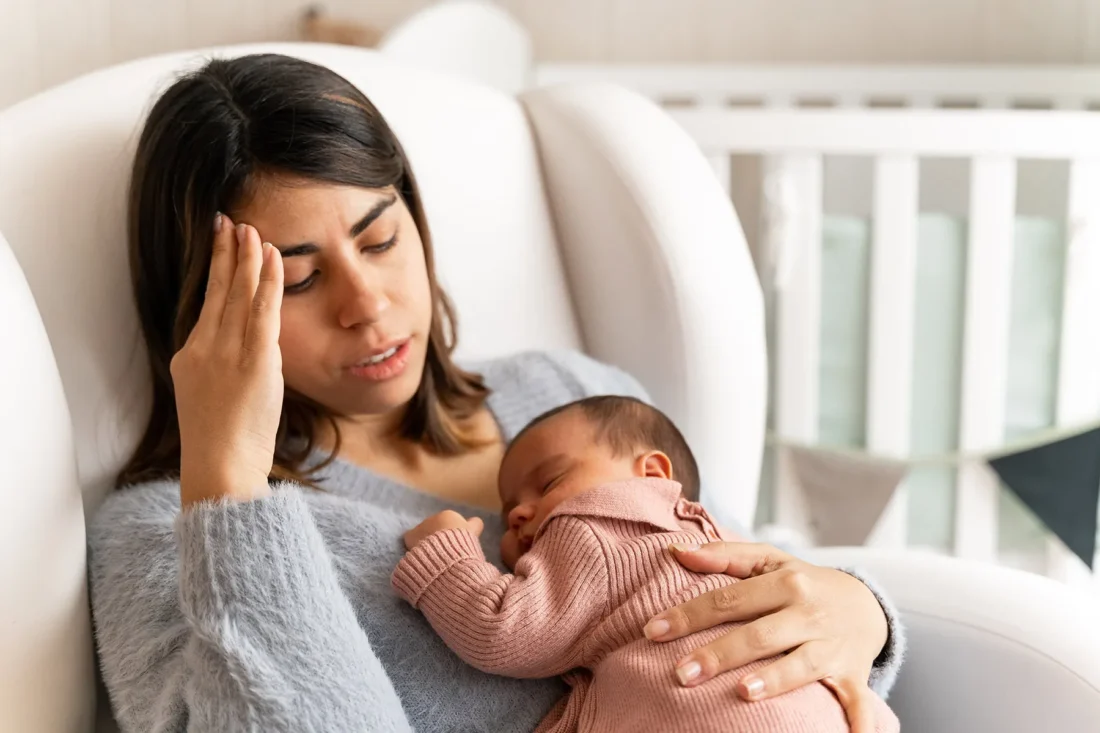
Part of what makes it so disorienting is that postpartum depression rarely looks the way people expect. What a depression therapist sees most often is not a mother who cannot stop crying. It is a mother who feels frighteningly little. Who loves her baby and feels nothing when she holds them. Who is doing everything right and cannot understand why she feels so wrong.
First: The Baby Blues Are Not the Same Thing
In the first week or two after birth, most new mothers experience some version of the baby blues. Hormones drop sharply after delivery, and it is entirely normal to feel tearful, overwhelmed, or emotionally raw during this period. Baby blues are common, temporary, and typically resolve on their own within a couple of weeks.
Postpartum depression is different. It is more persistent, more pervasive, and it does not lift on its own timeline. It can begin in the first weeks after birth, but it can also develop gradually over the first year. Many women do not recognize what they are experiencing as depression because they were watching for sadness, and sadness was not what arrived.
What Postpartum Depression Actually Feels Like
The most important thing to understand about postpartum depression is that it does not have one face. It can look like:
- Emotional numbness or a feeling of being disconnected from your baby, your partner, or yourself
- Irritability and rage that feel out of proportion, often directed at people you love
- Anxiety that is relentless, including intrusive thoughts about something happening to your baby
- Guilt and shame about not feeling the way you think you are supposed to feel
- Exhaustion that goes beyond the expected tiredness of new parenthood
- A sense that you have made a terrible mistake, or that your baby would be better off without you
That last one is particularly important to name, because it is often what women are most afraid to say out loud. Thoughts like these are a symptom of postpartum depression. They are not a reflection of who you are as a mother, and they are not something you should try to manage alone.
Why It Happens
Postpartum depression is not the result of being unprepared, unloving, or weak. It is the result of a perfect storm of biological, psychological, and social factors hitting at once.
The hormonal shift after delivery is dramatic and happens almost overnight. Add to that significant sleep deprivation, physical recovery, a profound identity shift, the pressure of keeping a new person alive, and, for many women, a significant reduction in the kinds of support and connection that normally sustain them. The conditions for depression are genuinely present, and for some women, that is enough.
A personal or family history of depression or anxiety increases the risk, as does a difficult pregnancy, a traumatic birth experience, or limited social support. But postpartum depression also affects women with no history of mental health struggles, in supportive relationships, who felt entirely prepared. It does not require a reason beyond the experience itself.
Why So Many Women Do Not Seek Help
The most common reason women do not reach out sooner is shame. There is an enormous amount of cultural pressure around new motherhood, an expectation of joy and gratitude and natural competence that leaves very little room for the reality that many women are struggling in ways they cannot name.
Many women also minimize what they are experiencing, telling themselves it is just tiredness, just adjustment, just a hard week. They compare their insides to other mothers’ outsides and conclude they are the only one not feeling what they are supposed to feel.
And some women are afraid that asking for help will confirm something they fear: that they are not good enough for this, that someone will take their baby, that admitting they are struggling means something permanent about who they are.
None of that is true. Asking for help is one of the most important things you can do for yourself and for your baby.
Postpartum Depression Is Treatable
This matters enough to say clearly: postpartum depression is treatable, and most women who receive appropriate support recover fully.
Treatment typically involves therapy, sometimes medication, and often both. It also involves building more support into your daily life, because isolation is one of the conditions under which postpartum depression thrives. The women who do well are not the ones who push through alone. They are the ones who let people in.
If something feels off, trust that. You do not have to be in crisis to deserve support. You just have to be a mother who is struggling, and that is enough.


