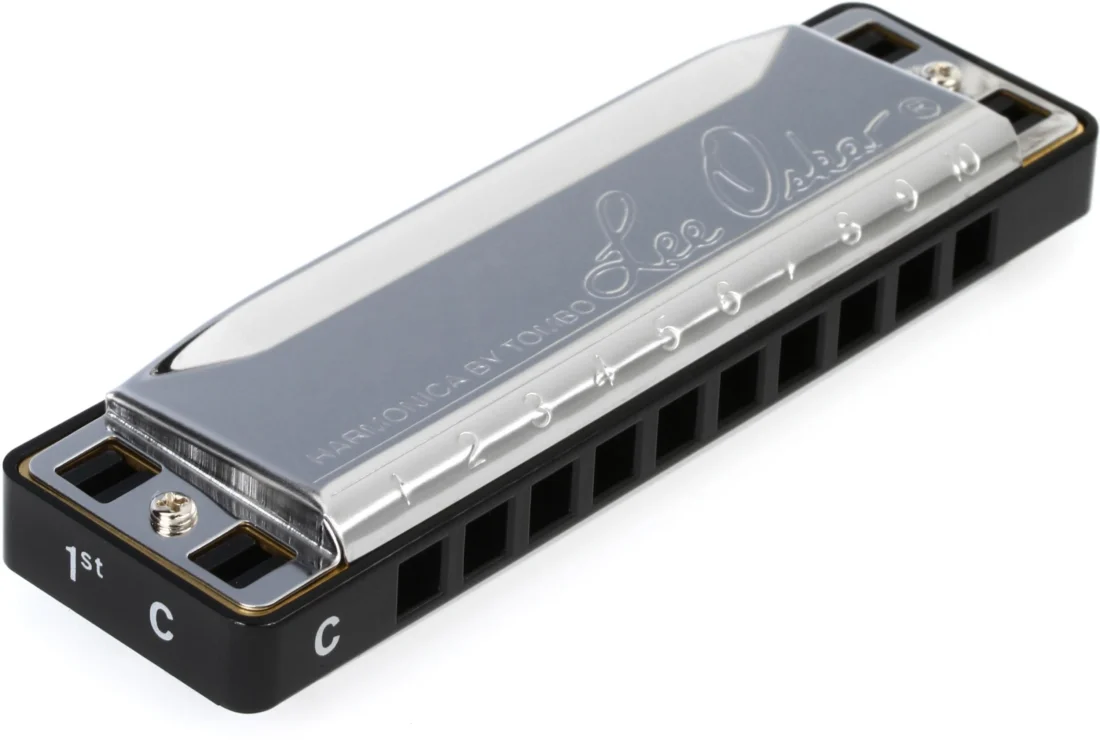
A 10-hole diatonic harmonica comes with 20 reeds and plays three full octaves in a four-inch instrument. That’s equivalent to a concert flute in melodic range, pocket-size. If you’re a solo musician and you’re trying to create a full sound without a band, or a looper pedal, or a laptop with backing tracks, that is not a novelty item, it’s a key strategic tool.
What Richter Tuning Actually Does For You
Most instruments give you one note per key. The diatonic harmonica will give you chords. They arrange the blow and draw notes in the Richter tuning system so that exhaling gives you a major chord and inhaling gives you a dominant seventh chord in the home key. Draw across holes 1 through 4 and you get a full chord. Isolate a single hole with your embouchure and you’re on a melody note. The transition between those two things takes seconds to learn, and the physical layout makes it almost intuitive once your mouth gets used to the positioning.
So, as a solo performer, you are not just playing a melody line. You’re playing rhythm and lead at the same time. A solo violinist plays a line. A solo harmonica player plays a line with a chord bed underneath it, all on a single breath.
The Physics of Bending and Why it Matters
Bending is the technique that transforms the harmonica from a merry folk instrument into something that can truly tug on the heartstrings. On the draw notes, you can drop the pitch by partially constricting your throat and moving your tongue backward. Changes the resonant volume of your oral cavity which in turn changes the vibration of the reed.
This is the blue notes that make blues, country, and rock harmonica what it is. Musically flattened thirds, fifths, and sevenths that you receive from bending draw notes are not capable of being played sharply by any fretted or keyed instrument. They lie between the keys on a piano, between the frets on a guitar. The harmonica doesn’t sound the way it does because it plays different notes from everyone else, but because it plays the same notes as everyone else in a different way.
Blow bends work on the upper register holes, and together with draw bends grant you the ability to slide into notes the way a vocalist does. The instrument stops sounding like a toy. It starts to sound like a person.
All of this is easier with diaphragmatic breathing. Breathing from the chest gives you a thin, weedy sound. Breathing from the diaphragm, the kind of deep, abdominal breathing that most singers and wind players specifically train for, gives you the air pressure control to hold long bends, swell notes dynamically, and play for a full set without your tone giving out on you.
Instrument Construction and Why it Affects Performance
Not all harmonicas are created to meet the hands-free expectations of solo professionals. The tolerances inside the harp, the hermetic seal between the comb and reed plates and the cover plates, dictate how much air the reeds take to respond. With a leaky harp, the reeds don’t cooperate and you must inflate your lungs trying to extract each tone from the instrument. The energy wasted accumulates quickly in a performance, making you run out of breath even faster.
The comb is also an issue when it comes to high performance. Using a cheap material or one that with an interesting tonal character (wood) impairs airtightness over time can really spoil your performance. ABS or wood? While plastic is technically less demanding, tends to take less moisture and its adaptation over a performance is barely noticeable, wood is usually more appreciated by the players, and definitely provides a more personal, warmer and richer, tone. What is not told about wood combs is how more delicate they are, from a proper break-in period to the careful drying process that must follow each session.
Last but not least, even the reed plate quality affects performance and not just the resistance to excess moisture that can spoil a reed’s pitch. The bright tone and the reed pitch stability under bending depend on this material. Steel reed plates tend to produce brighter tones on the higher end and deliver the best performance over time, resisting also while somebody plays the hardest bending notes second position blues can ask.
For solo players who are investing time in mastering and performing and depend on bending and overbending in song creation, choosing a harmonica from a company such as harmo, for instance, that engineers specifically for professional diatonic performance is the right decision. You get the airtightness and the reed response that precise bending and overbending require.
Playing Positions: One Harmonica, Multiple Worlds
A diatonic harmonica is tuned to a particular key, however, it doesn’t mean you’re restricted to playing that key. The concept of positions, playing the instrument from different root notes relative to its tuning, profoundly enhances the capabilities of a single harmonica.
First position, or straight harp, the harmonica is played in its original key. A C harmonica in the first position provides a clean C major scale, perfect for folk music, Celtic songs, and simple country music. The blow notes reach the root chord. Everything sounds normal. It’s the easiest way to start for beginners.
Second position, or cross harp, is where most serious soloists play. In the second position, you play a C harmonica to get G, meaning you apply holes and draws that aren’t intended to be the “home” of the scale. The natural bend notes in the second position appear exactly where the emotional blue notes are played. Blues, rock, and soul harmonica are mainly played using the second position, the bends aren’t random, they are naturally available based on how the positions are set up.
There’s also a third position, and even more positions that are utilized for playing jazz and music in the minor key. You genuinely make one harmonica versatile when you understand this method. A soloist that carries harmonicas in G, C, A, and D can play popular music from almost any genre and that’s only four small instruments which are just a fraction of the cost of a decent microphone.
Hands-Free Playing and the Solo Performer Setup
A neck rack, also known as a harmonica holder, is a device that you wear around your neck to hold a harmonica in front of your mouth. This allows you to play guitar and the harmonica at the same time. Bob Dylan famously used a neck rack, as did Neil Young, Bruce Springsteen, and countless other folk and blues players hoping to achieve a full solo sound without any second musicians.
What this means for a solo player or singer-songwriter, or busker, is that this one simple piece of gear effectively gives you an entire extra melodic voice in your song at zero additional footprint in your gear bag. Your guitar plays the progression and rhythm. Your harp sings the melody and plays counter-melody during the bridge or solo sections. Your combined sound is bigger than that of probably most two-piece bands.
It is a skill that takes a little while to get the hang of. You have to get the angle of the harp right in relation to your embouchure and be able to jump from singing the notes clearly to hitting your harp without losing any time. But it’s a physical skill with a relatively short learning curve, and the payoff in live performance is immediate.
Advanced Technique: Overbending and the Full Chromatic Scale
A diatonic harmonica is constructed so that it plays in only one key. Standard bending makes you get most of the notes that are missing in a key, but not all of them; overblowing and overdrawing make them available too.
Overbending works by choking a reed completely and forcing the air to make the opposite reed (one octave higher) sound. It’s a quite difficult playing skill, needing fine embouchure control, and a properly airtight and configured instrument. Done properly, it unlocks every semitone in the entire range of the instrument, making the diatonic essentially a chromatic.
It’s important for single artists; they can play in any key without swapping harmonicas midway through a song. Jazz harmonica players typically use overblowing to work through several key changes, since they have to play melodies that a technically restricted diatonic could never make. They also use overdrawing for some chromatic notes too.
Tongue blocking is a technique worth mentioning here. By covering multiple holes with the tongue, and leaving a gap at one side, you can produce split intervals and octaves simultaneously; effectively you can play two-voice counterpoint on a single instrument. When combined with the actual layout of chords, thanks to Richter tuning, a skilled tongue blocker can sound like a small ensemble instead of a single performer.
Choosing Your First Key and Building From There
Begin with C. This may sound random, but C has the most literature, the most pedagogy, and the most instructional material written for it out of all the keys on the diatonic harmonica. Every book, YouTube lesson, and tablature ever created makes C their base assumption. If you learn the geography of the instrument in C, your first position is C major, and your second position (the most-used alternate position) is G major, two of the most common keys in folk, pop, and country music.
G comes after C. The key of G accounts for most of the low male vocal music in the world and is very prevalent in folk and country music. Then A, which is the workhorse key for second position Chicago and Delta blues. D is perfect for Celtic and an absolute staple in acoustic music with higher ranged vocals.
With those four C, G, A, and D harmonicas, you’re pretty much set to gig anywhere in the world. The total sum of all four of those harps is less than a decent guitar pickup. As a solo musician trying to put together a rig that’s legitimate and complete at the professional level, the harmonica is one of the only instruments that truly provides that at that price range.
The Breath Connection
Playing a wind instrument involving breath is an experience different from fretted or keyed instruments, one that is difficult to describe. Essentially, the harmonica instrument produces no sound until you breathe air into it. There’s no mechanical delay between your motive and the sound, such as a key or a bow. It’s just your body and your breath that directly control the vibration of the metal reeds by blowing air.
On a live solo performance, the audience can feel that direct connection. They often respond to it, although they may not realize why. It’s like the harp is alive, in a way, it really is, functioning through the same organic system as the human vocal cords. A solo performer who grasps this concept and exploits it, rather than treating the harmonica as a casual gimmick in the performance set, can tap into the emotional reservoir that few instruments could possibly match.
The diatonic harmonica isn’t a simple, small instrument. It’s a very complex sophisticated instrument demanding intense practice. And it’s very rewarding to play every time you perform with no backing track.


